|
|
|
|
|
|
|
|
|
|
|
|
|
|
|
|
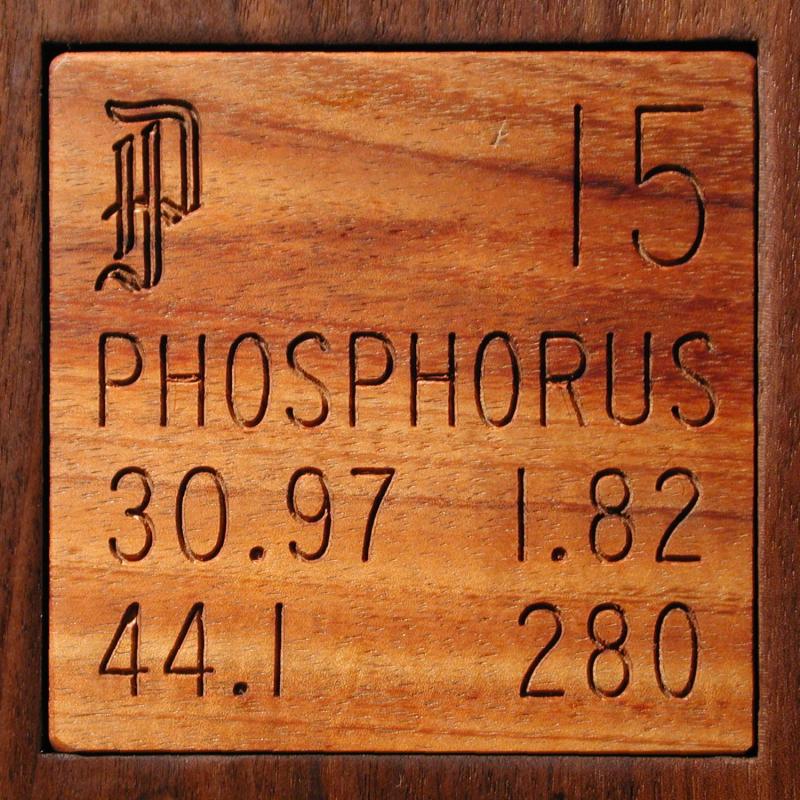
Phosphorus is all about fire. White phosphorus (the dangerous form) literally glows in the dark because it's always reacting with the air around it (this glowing is where phosphorus got its name). Red phosphorus, which is exactly the same stuff just in a different molecular form, is quite stable and safe to keep around. The dramatic difference between red and white phosphorus is an extreme example of allotropes: different physical forms of the same element.
Phosphorus has a long and storied history. It was popular with alchemists who used its flammability to impress the gullible. It's been used in medicine, both good and bad. Whole books have been written about it (The 13th Element by John Emsley). It's also used in kitchen matches.
|
|
| |
|
|
|
|
|
 Kitchen matches. Kitchen matches.
Boy, if these were chemicals the warnings on them would be a mile wide. Caution! Pyrophoric! May spontaneously ignite with friction! Wear appropriate protective gear when handling this substance! Never expose to heat or rough handling! Probably the second most dangerous element I have after cesium. These are strike-anywhere matches which contain a small amount of red phosphorus in the head. Strike-on-box matches contain phosphorus only in the striking surface, not in the match itself.
I remember years ago, I couldn't have been more than ten, making rockets out of matches and tin (aluminum) foil. You wrap the head of the match and about half way up the stick in several layers of foil, being sure to seal the part around the head well. Then you prop it head end down on some more foil and hold a lit match to the foil down where the head of the match is. After a few seconds the match inside the foil will light, and the gas generated will propel the match out of the foil barrel and several feet down the sidewalk.
I remember doing this mainly with cardboard matches such as you get in a matchbook, but I don't see why it wouldn't work with kitchen matches too. It works because the match head contains both a fuel and an oxidizer, so you don't need any air inside the foil for the match to burn.
Source: Grocery Store
Contributor: Theodore Gray
Acquired: 12 June, 2002
Text Updated: 2 March, 2006
Price: $2
Size: 2"
Purity: <20%
|
|
|
|
|
|
|
Red Phosphorus powder.
Phosphorus comes in several allotropic forms. Red phosphorus is reasonably safe, and not likely to spontaneously explode or anything. Not so white phosphorus: That has to be kept under water, or preferably not kept at all. It's the form that glows in the dark because of the spontaneous reaction with air on its surface. Funny how the bonding structure can make such a difference.
Click the source link for an interesting story about where this sample came from.
Source: Tryggvi Emilsson and Timothy Brumleve
Contributor: Tryggvi Emilsson and Timothy Brumleve
Acquired: 6 September, 2002
Text Updated: 16 April, 2009
Price: Donated
Size: 0.75"
Purity: >99%
Sample Group: Powders
|
|
|
|
|
|
|
Sample from the RGB Set.
The Red Green and Blue company in England sells a very nice element collection in several versions. Max Whitby, the director of the company, very kindly donated a complete set to the periodic table table.
To learn more about the set you can visit my page about element collecting for a general description or the company's website which includes many photographs and pricing details. I have two photographs of each sample from the set: One taken by me and one from the company. You can see photographs of all the samples displayed in a periodic table format: my pictures or their pictures. Or you can see both side-by-side with bigger pictures in numerical order.
The picture on the left was taken by me. Here is the company's version (there is some variation between sets, so the pictures sometimes show different variations of the samples):

Source: Max Whitby of RGB
Contributor: Max Whitby of RGB
Acquired: 25 January, 2003
Text Updated: 11 August, 2007
Price: Donated
Size: 0.2"
Purity: 99%
|
|
|
|
|
|
|
Sample from the Everest Set.
Up until the early 1990's a company in Russia sold a periodic table collection with element samples. At some point their American distributor sold off the remaining stock to a man who is now selling them on eBay. The samples (except gases) weigh about 0.25 grams each, and the whole set comes in a very nice wooden box with a printed periodic table in the lid.
To learn more about the set you can visit my page about element collecting for a general description and information about how to buy one, or you can see photographs of all the samples from the set displayed on my website in a periodic table layout or with bigger pictures in numerical order.
Source: Rob Accurso
Contributor: Rob Accurso
Acquired: 7 February, 2003
Text Updated: 29 January, 2009
Price: Donated
Size: 0.2"
Purity: >99%
|
|
|
|
|
|
|
Red Phosphorus powder ampouled under argon.
This is fairly safe red phosphorus ampouled under argon to keep it dry and clean. This sample was donated by Dave Roberts of DePauw University, who I got to know while I was installing the beautiful periodic table display that now graces their Julian Science Center. Dave found a bunch of surplus elements in their chemical storeroom, and naturally Max Whitby and I graciously offered to take them off his hands.
Source: Dave Roberts
Contributor: Dave Roberts
Acquired: 1 November, 2003
Text Updated: 11 August, 2007
Price: Donated
Size: 0.8"
Purity: 99.999%
Sample Group: Powders
|
|
|
|
|
|
|
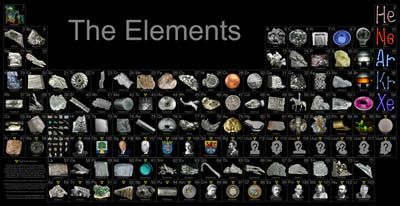
  Violet Phosphorus. Violet Phosphorus.
Phosphorus has all sorts of allotropes (different physical forms of the same element), which come in many colors: Red, black, and white being the only real ones (and white being the most dangerous by far). Violet phosphorus is a mixture of the red and black allotropes, quite unusual, and it was made by Max Whitby himself using one of the strange recipes of heat, pressure, and catalysts needed to transform phosphorus among its various crystal structures.
I chose this sample to represent its element in my Photographic Periodic Table Poster. The sample photograph includes text exactly as it appears in the poster, which you are encouraged to buy a copy of.
Source: Max Whitby of RGB
Contributor: Max Whitby of RGB
Acquired: 15 May, 2005
Text Updated: 4 May, 2007
Price: Donated
Size: 0.1"
Purity: >99%
|
|
|
|
|
|
|
Black Phosphorus.
This black phosphorus was made by Max Whitby using the strange combination of heat and pressure needed to convert the red allotrope into black. Amazingly, one of the required ingredients to make black phosphorus is a seed crystal of black phosphorus. Hm. Which came first, the chicken or the chicken?
Source: Max Whitby of RGB
Contributor: Max Whitby of RGB
Acquired: 15 May, 2005
Price: Donated
Size: 0.1"
Purity: >99%
|
|
|
|
|
|
|
 Home made match. Home made match.
I wrote an article about making matches for my popular science column: This is a picture of one of them burning. In the story for this sample (click storybook icon) I give more details and more pictures than appear in the magazine, showing all the steps needed to make matches like this.
Source: Theodore Gray
Contributor: Theodore Gray
Acquired: 20 October, 2005
Price: Donated
Size: 1"
Purity: 5%
|
|
|
|
|
|
|
M34 White phosphorus hand grenade.
This is an inert shell that, if active, would be filled with 15 ounces of white phosphorus and a small charge that distributes it over a 35 meter radius when set off. Anyone in that area without protection would be severely burned and/or poisoned, and flammable material would likely end up in flames. Interestingly, the average soldier is said to be able to throw it approximately 30 meters, 5 meters short of its radius of destruction. Much larger white phosphorus incendiary bombs were used in WWII and probably still are: Compared to them this is just a baby.
Interestingly, descriptions you can find on the web say this grenade, which is considered an obsolete design, can also be used to create a smoke screen or signal. The smoke created is phosphorus pentoxide, which is actually not particularly toxic, and it's said that the high temperature at which the white phosphorus is burning causes the smoke to rise rapidly, making it more suitable for signaling purposes than for creating a smoke screen.
Source: eBay seller finch34
Contributor: Theodore Gray
Acquired: 20 October, 2005
Price: $61
Size: 5"
Purity: 0%
|
|
|
|
|
|
|
Really white phosphorus.
White phosphorus is almost always tinged with yellow. So much so that "yellow phosphorus" is an alternate name for this allotrope of phosphorus. Why? Because white phosphorus turns yellow spontaneously on exposure to light. Kind of like those quantum mechanical phenomena that you can't observe without changing: If you look at your white phosphorus too long, it will turn yellow. But fortunately not too fast: I photographed 360 frames of this ampule rotating around a complete circle, which takes half an hour, and it did not become noticeable yellow. I had turned my studio lights as low as I could, under full intensity illumination, and certainly under sunlight, it probably would have developed some yellow in that time.
Now that it's been photographed, this ampule will stay in the dark until there's a really good reason to get it out again.
Source: Ivan Timokhin
Contributor: Theodore Gray
Acquired: 28 December, 2006
Text Updated: 21 January, 2007
Price: Donated
Size: 1/4"
Purity: 99.99%
|
|
|
|
|
|
|
Kitchen matches.
Strike-on-box matches are safer than strike-anywhere matches because the matches themselves don't contain all the chemicals needed to get them to light. The key trigger, red phosphorus, is contained in the striking surface on the outside of the box. This also means that you know this surface must contain red phosphorus, unlike the striking surface on a box of strike-anywhere matches, which is just sandpaper.
Source: Walmart
Contributor: Theodore Gray
Acquired: 8 February, 2008
Text Updated: 8 February, 2009
Price: $2
Size: 5"
Purity: <3%
|
|
|
|
|
|
|
Waterproof matches.
Any type of match that must be struck on the box, whether it's a common kitchen match or these waterproof camping matches, has one thing in common: The striking surface contains red phosphorus, the key ingredient in getting the match to light.
Source: Walmart
Contributor: Theodore Gray
Acquired: 8 February, 2008
Text Updated: 8 February, 2009
Price: $2
Size: 2"
Purity: <3%
|
|
|
|
|
|
|
Beautiful match block.
What a clever presentation of matches! You're meant to break them off as needed, but of course the object is far too beautiful to actually use.
Source: Design Pyrenees
Contributor: Theodore Gray
Acquired: 2 April, 2009
Text Updated: 3 April, 2009
Price: $40
Size: 5"
Purity: <5%
|
|
|
|
|
|
|
Home-made matches in holder.
As you can see from this and other samples I have listed under phosphorus, there are a variety of styles of "match safes" that were in apparently common use in the past. Why don't you have a match safe today? Because matches no longer tend to ignite themselves spontaneously. Early matches were chemically unstable and had a tendency to decide on there own when a good time to light might be, explaining the popularity of metal boxes designed to contain this situation.
To make the point, and because I am genuinely concerned about them, I have stocked this holder with a few of the home-made matches I made for one of my Popular Science columns a few years ago. I have no idea how long they will last before spontaneously combusting.
Source: Theodore Gray
Contributor: Theodore Gray
Acquired: 16 April, 2009
Text Updated: 17 April, 2009
Price: Priceless
Size: 3"
Purity: <10%
|
|
|
|
|
|
|
Tin match box.
Listed under phosphorus because it was designed to contain potentially dangerous old matches. From the seller:This very old tin box from R.Bell & Co., London contained "Not Under 140 Matches" according to the embossed legend on the front. Top says Bell established in 1832 and this box is certainly at least 100 years old. In worn but sound condition.
Source: eBay seller hispls
Contributor: Theodore Gray
Acquired: 16 April, 2009
Text Updated: 23 April, 2009
Price: $4
Size: 3"
Purity: 0%
|
|
|
|
|
|
|
|
|
|
|
|
|
|
|
|
Autunite.
I bought some Fiestaware plates from Jim to use in museum displays I'm helping coordinate, and he threw in this little sample of Autunite, a uranium mineral. He probably has Fiestaware available if you need some.
Source: Jim Markitell
Contributor: Jim Markitell
Acquired: 30 May, 2003
Price: Donated
Size: 1.5"
Composition: Ca(UO2)2(PO4)2.10H2O
|
|
|
|
|
|
|
Autunite.
Autunite, if it is not kept in a humid environment, tends to degrade due to loss of water from the crystal matrix (see formula below, which indicates there are 10 molecules of water associated with each atom of uranium). This sample flaked apart as I was trying to mount it for photography, dropping little leaves of radioactivity everywhere. Still, quite pretty.
Source: eBay seller dr**zarkoff
Contributor: Theodore Gray
Acquired: 10 June, 2005
Price: $15
Size: 0.5"
Composition: Ca(UO2)2(PO4)2.10H2O
|
|
|
|
|
|
|
Torbernite.
Torbernite is a lovely, lovely green color (I would guess from the copper). It's also quite radioactive, from the uranium content, and even more so from the mixture of uranium decay products that have built up in it over millions of years.
Source: eBay seller migalf1
Contributor: Theodore Gray
Acquired: 3 June, 2005
Price: $27
Size: 1.5"
Composition: Cu(UO2)2(PO4)2.8-12H2O
|
|
|
|
|
|
|
|
|
|
|
|
|
Autunite.
This autunite was donated by the mine owner who dug it up: It's a lovely specimen, photographed here under ultraviolet light. You can get samples of this an other radioactive minerals direct from the mine.
Source: eBay seller boomologist
Contributor: Theodore Gray
Acquired: 25 June, 2005
Price: Donated
Size: 1.5"
Composition: Ca(UO2)2(PO4)2.10H2O
|
|
|
|
|
|
|
Autunite.
This autunite was donated by the mine owner who dug it up: It's a lovely specimen, photographed here under ultraviolet light. The main picture for this sample actually shows the back side of the sample, which has some very nice large crystals. The front side is completely covered with more autunite crystals: Click the turntable icon on the right to get an image you can rotate around and see from all sides.
You can get samples of this an other radioactive minerals direct from the mine.
Source: eBay seller boomologist
Contributor: Theodore Gray
Acquired: 25 June, 2005
Price: Donated
Size: 1.5"
Composition: Ca(UO2)2(PO4)2.10H2O
|
|
|
|
|
|
|
Monazite Sand.
Monazite is a thorium-bearing mineral that occurs in sand deposits in a number of places around the world. Only a small proportion of the sand in this sample is actually monazite: It is probably somewhat selected compared to normally occurring sand deposits, but not much. It's kind of remarkable, really, that you can collect thorium just by scooping it up with a shovel.
Source: Max Whitby of RGB
Contributor: Max Whitby of RGB
Acquired: 20 September, 2005
Price: Donated
Size: 1.5"
Composition: (Ce,La,Nd,Th)PO4
|
|
|
|
|
|
|
|
|
|
Hydroxilherderite.
Description from the source:
Hydroxilherderite (CaBe(PO4).(OH) mon.), Linopolis, Minas Gerais, Brazil. Geminated, good rare crystal. 3,2x2x1,5 cm; 10 g.
Source: Simone Citon
Contributor: John Gray
Acquired: 26 September, 2008
Text Updated: 28 September, 2008
Price: Trade
Size: 1.25"
Composition: CaBe(PO4).(OH)
|
|
|
|
|
|
|
Fluellite.
Description from the source:
Fluellite (Al2(PO4)F2(OH).7H2O orth.), Tom's Quarry, Kapunda, South Australia, Australia. Rare crystals on the phosphatic matrix. 3x2,7x2 cm; 15 g.
Source: Simone Citon
Contributor: John Gray
Acquired: 26 September, 2008
Text Updated: 28 September, 2008
Price: Trade
Size: 1.2"
Composition: Al2(PO4)F2(OH).7H2O
|
|
|
|
|
|
|
Wavellite.
Description from the source:
Wavellite (Al3 (PO4)2 (OH,F)3x5H2O orth.), Tom's Quarry, Kapunda, South Australia, Australia. Radiating colorless crystals on limonitic matrix, from a rich in phosphates locality. 1,9x1x0,8 cm; 3 g.
Source: Simone Citon
Contributor: John Gray
Acquired: 30 September, 2008
Text Updated: 1 October, 2008
Price: Trade
Size: 0.75"
Composition: Al3(PO4)2(OH,F)3.5H2O
|
|
|
|
|
|
|
Wavellite.
Description from the source:
Wavellite (Al3 (PO4)2 (OH,F)3x5H2O orth.), Maulding, Montgomery, Arkansas, USA. Nice spherical crystal clusters on matrix with green color, better than the photo. 7,2x4x3,5 cm; 63 g.
Source: Simone Citon
Contributor: John Gray
Acquired: 30 September, 2008
Text Updated: 1 October, 2008
Price: Trade
Size: 2.8"
Composition: Al3(PO4)2(OH,F)3.5H2O
|
|
|
|
|
|
|
Apatite.
Description from the source:
Apatite (Ca5 (PO4)3 F hex.), Otter Lake, Quebec, Canada. Isolated well formed crystal with high lustre. 4,5x2,5x1,5 cm; 35 g.
Source: Simone Citon
Contributor: John Gray
Acquired: 30 September, 2008
Text Updated: 1 October, 2008
Price: Trade
Size: 1.75"
Composition: Ca5(PO4)3F
|
|
|
|
|
|
|
Cornetite.
Description from the source:
Cornetite (Cu+23(PO4) (OH)3 orth.), Shaba, Rep. Dem. of Congo. Rare crystal sections on matrix. 3,2x2x0,8 cm; 4 g.
Source: Simone Citon
Contributor: John Gray
Acquired: 30 October, 2008
Text Updated: 31 October, 2008
Price: Trade
Size: 1.25"
Composition: Cu+23(PO4) (OH)3
|
|
|
|
|
|
|
|
|
|
|
|
|
Monazite.
Description from the source:
Monazite ( (Ce La Nd Th) P O4 mon.), Steli near Tveit, Iveland, Nordge. Extremely well crystallized example. 0,8x0,4x0,4 cm; 5 g with box.
Source: Simone Citon
Contributor: John Gray
Acquired: 28 January, 2009
Text Updated: 29 January, 2009
Price: Trade
Size: 0.3"
Composition: (CeLaNdTh)PO4
|
|
|
|
|
|
|
Pyromorphite.
Description from the source:
Pyromorphite (Pb5 (PO4)3 Cl hex.), Bad Ems, Germany. Little but evident crystal cluster. 0,8x0,5x0,4 cm; 9 g with box.
Source: Simone Citon
Contributor: John Gray
Acquired: 28 January, 2009
Text Updated: 29 January, 2009
Price: Trade
Size: 0.3"
Composition: Pb5(PO4)3Cl
|
|
|
|
|
|
|
Pyromorphite.
Description from the source:
Pyromorphite (Pb5 (PO4)3 Cl hex.), Daoping Mine, China. Little, but very nice crystal group. 1x1x0,8 cm; 2 g.
Source: Simone Citon
Contributor: John Gray
Acquired: 28 January, 2009
Text Updated: 29 January, 2009
Price: Trade
Size: 0.4"
Composition: Pb5(PO4)3Cl
|
|
|
|
|
|
|
Frilled dragon skull.
I've always wanted to buy something from The Bone Room and I finally settled on this pretty Frilled Dragon skull. It's some kind of lizard, and very complex inside, look at the 3D rotation video to see all the internal structures.
Source: The Bone Room
Contributor: Theodore Gray
Acquired: 8 February, 2009
Text Updated: 8 February, 2009
Price: $70
Size: 2"
Composition: Ca10(PO4)6(OH)2
|
|
|
|
|
|
|
Metatorbernite.
Description from the source:
Metatorbernite ( Cu+2 (UO2)2 (PO4)2x8H2O tet.), Monte Painter, Australia. Green laminar crystals on limonitic, rich in oxides matrix. 6,5x5x3 cm; 87 g.
Source: Simone Citon
Contributor: John Gray
Acquired: 11 March, 2009
Text Updated: 12 March, 2009
Price: Trade
Size: 2.5"
Composition: Cu(UO2)2(PO4)2.8H2O
|
|
|
|
|
|
|
|
|
|
|
|
|
|
|
|
|
|
|
|
|